Columbus State University News
Industry partnerships, hands-on experiences turn waterways into science labs for biology graduate students
July 15, 2026
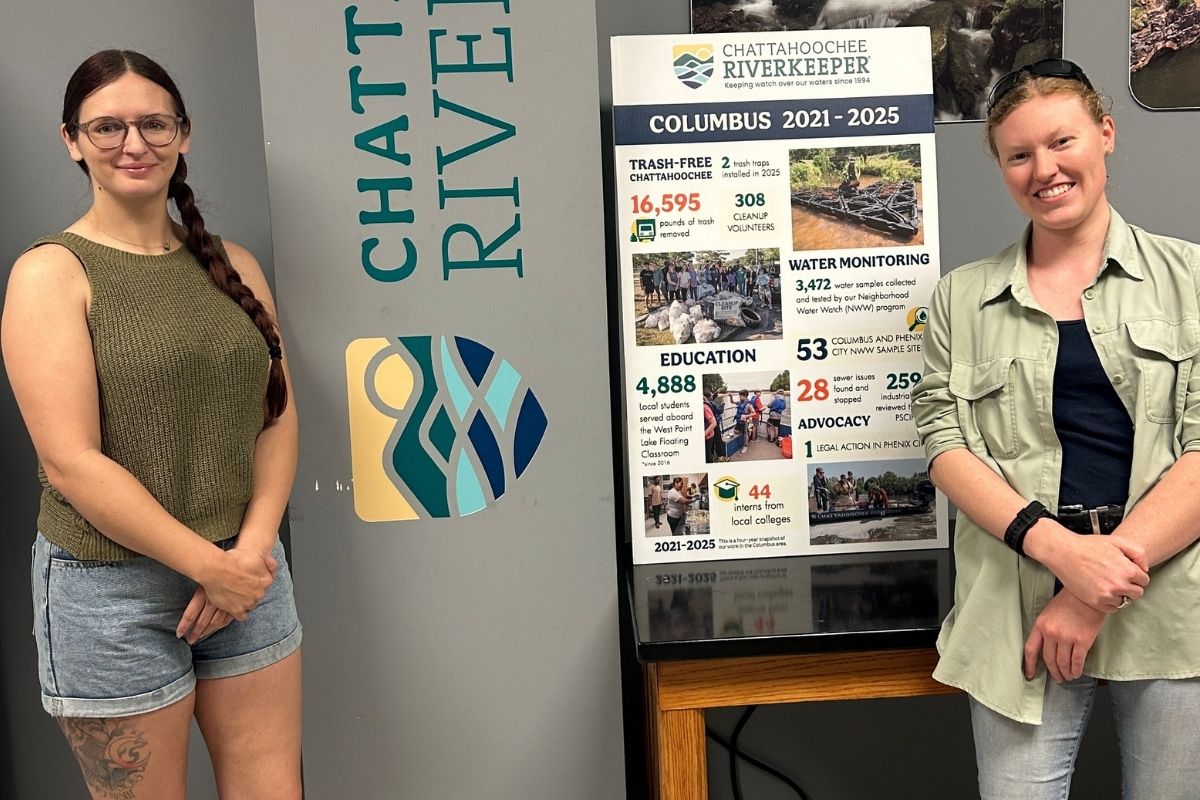
For students at Columbus State University—especially those in science majors like biology— learning often goes beyond the typical classroom or on-campus lab. By collaborating with environmental organizations, STEM students are developing the practical skills they need to become practicing scientists and educators.
During the spring semester, master’s students Aleha Korzen and Amanda Cook turned Georgia’s waterways into their personal classrooms by combining hands-on learning with their research interests and collaborating with some of the state’s most well-known ecological groups.
Focusing on the health of our local waterways, Cook collaborated with the Chattahoochee Riverkeeper to expand her research on heavy metals such as lead and magnesium in nearby rivers—and to investigate how these metals may affect fish, particularly bluegill and redbreast sunfish.
“Water is a huge resource and a key tourist attraction in Columbus that directly impacts our lives,” Cook explained. “We rely on it for drinking, fishing, swimming and boating every day. If the water becomes contaminated, it can pose risks to our health. By examining the fish in these waters, we can find links between their health and our own.”
Korzen’s research connects academic study with active conservation, involving both the Chattahoochee Riverkeeper and Georgia’s Department of Natural Resources. Her focus is on the region’s aquatic biodiversity, particularly the snail bullhead catfish.
“Because the snail bullhead is an uncommon sportfishing species in local waters, very little is known about its aging and growth patterns,” Korzen noted. “By better understanding this species of catfish, we can better understand our overall aquatic ecosystem and the other species that also call it home.”
Applied research’s importance to STEM
Both projects align with the biology program’s core philosophy that genuine mastery
of STEM subjects is achieved through hands-on experience. Korzen and Cook are sharing
their data on heavy metals and other impurities with the Chattahoochee Riverkeeper
and state scientists. This data may also interest neighboring states whose waterways
connect with Georgia’s both upstream and downstream.
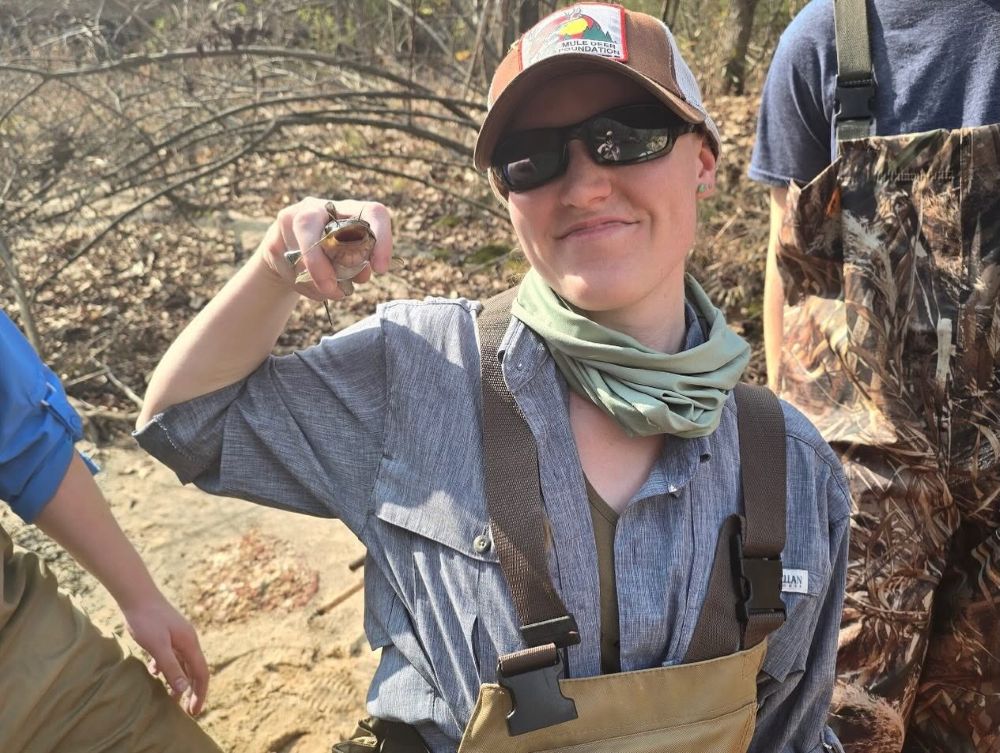 Field-based experiential learning allows students like Korzen to get their hands dirty
while applying what they learn in the classroom.
Field-based experiential learning allows students like Korzen to get their hands dirty
while applying what they learn in the classroom.
Applied research plays a crucial role in science education and in preparing students as future STEM professionals, noted Dr. Mike Newbrey, a senior lecturer in the Department of Biology.
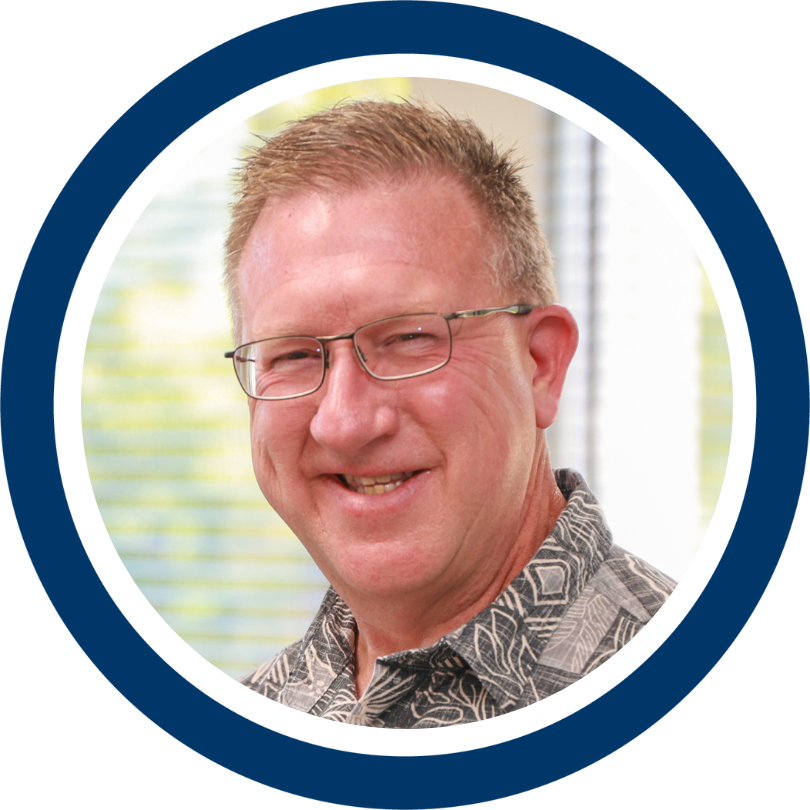 “This research is crucial, and through fieldwork, it helps students in the biological
sciences learn how to identify, catch and dissect fish,” Newbrey (pictured) explained.
“For students across the College of Letters & Sciences, applied research teaches them how to gather and interpret data and to test hypotheses
according to the scientific method. This process makes them proficient in scientific
terminology.”
“This research is crucial, and through fieldwork, it helps students in the biological
sciences learn how to identify, catch and dissect fish,” Newbrey (pictured) explained.
“For students across the College of Letters & Sciences, applied research teaches them how to gather and interpret data and to test hypotheses
according to the scientific method. This process makes them proficient in scientific
terminology.”
Scientific curiosity initially drew Cook to earn a bachelor’s degree in biology from Columbus State in December 2024, and that experience motivated her to continue her education there. She has appreciated the independence that comes with conducting research as a master’s student.
“Being a graduate student definitely involves more responsibility, but also more opportunity,” she said, mentioning that her duties include teaching and mentoring undergraduate lab students. “In my undergrad studies, my focus was on earning As and producing quality papers and lab reports. Now, my time is mainly spent on pursuing the research I am passionate about, fitting it around my class schedule.”
According to Newbrey, as students undertake their graduate research, they are also broadening their experiential learning beyond mere scientific knowledge.
“Our graduate students acquire valuable skills and career-ready competencies outside of biology,” Newbrey stated. “Through collaboration with industry professionals across the public, private and nonprofit sectors, students like Aleha and Amanda graduate not only with a degree but also with a portfolio showcasing real-world impact and a network of professional connections.”
Korzen credited her collaboration with industry experts for helping her “branch out
in my profession, gain real experience and make connections I’ll use when I’m looking
for jobs or if I decide to pursue a doctoral degree.” In addition to new hands-on
experiences, her work with the state’s Department of Natural Resources has given her
access to equipment not typically available in a university lab.
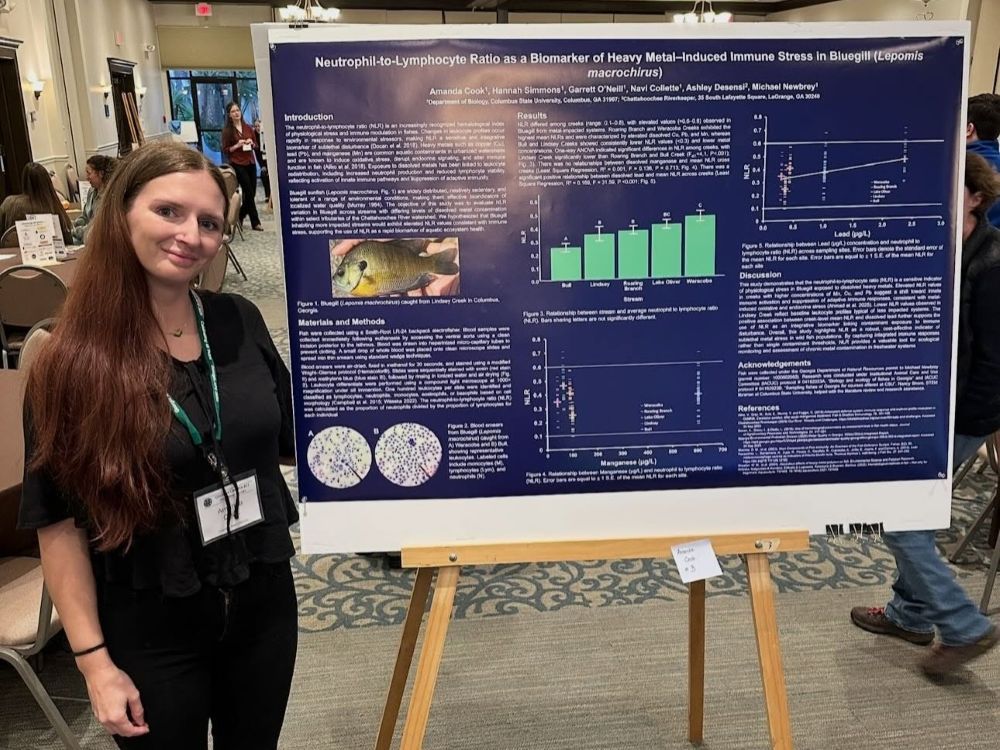 Cook shares her findings on the effects of heavy metals on bluegill at a research
conference.
Cook shares her findings on the effects of heavy metals on bluegill at a research
conference.
“I feel like I’ve had more opportunities to share about and present my research through
my studies at Columbus State than my peers at other universities do,” Cook added.
“There’s the annual Tower Day here on campus, and the department offers us many opportunities during the year to
go to conferences.”
To present their research findings at poster sessions and conferences, students need to master more than just scientific principles, as Newbrey explained. They must also develop skills such as analyzing data, writing reports and delivering oral presentations that extend beyond science.
“These career competencies will ultimately make them better communicators in their fields, whatever they choose to do professionally with their Columbus State degrees,” he added. “Those experiences are invaluable for developing critical thinking and the skills they’ll need to be successful in their future careers.”
Although they still have time before completing their degrees and selecting specific careers, both plan to pursue doctoral degrees. Cook aims to eventually teach at the college level. Korzen aspires to be a field-based researcher, a decision she attributes to the mentoring she’s received at Columbus State.
“Mentorship has really helped me decide what I want to do professionally,” Korzen said. “Having a good mentor to encourage you—not to hold your hand, but to build on what you already know and to stand on that. Getting that encouragement here at Columbus State has helped me flourish.”
Newbrey relishes his role as a faculty mentor and sees it as a way to pass the torch.
“My job is to advance my students’ career goals in whatever direction they choose,” he said. “Amanda or Aleha could replace me in the classroom, lab or field one day so they can train and mentor the next generation of scientists—and I’m fine with that.”
Media contact: Michael Tullier, APR