Columbus State University News
Secret weapon in your spice rack? Common herbs, supplements may hold key to fighting cancer
July 23, 2024
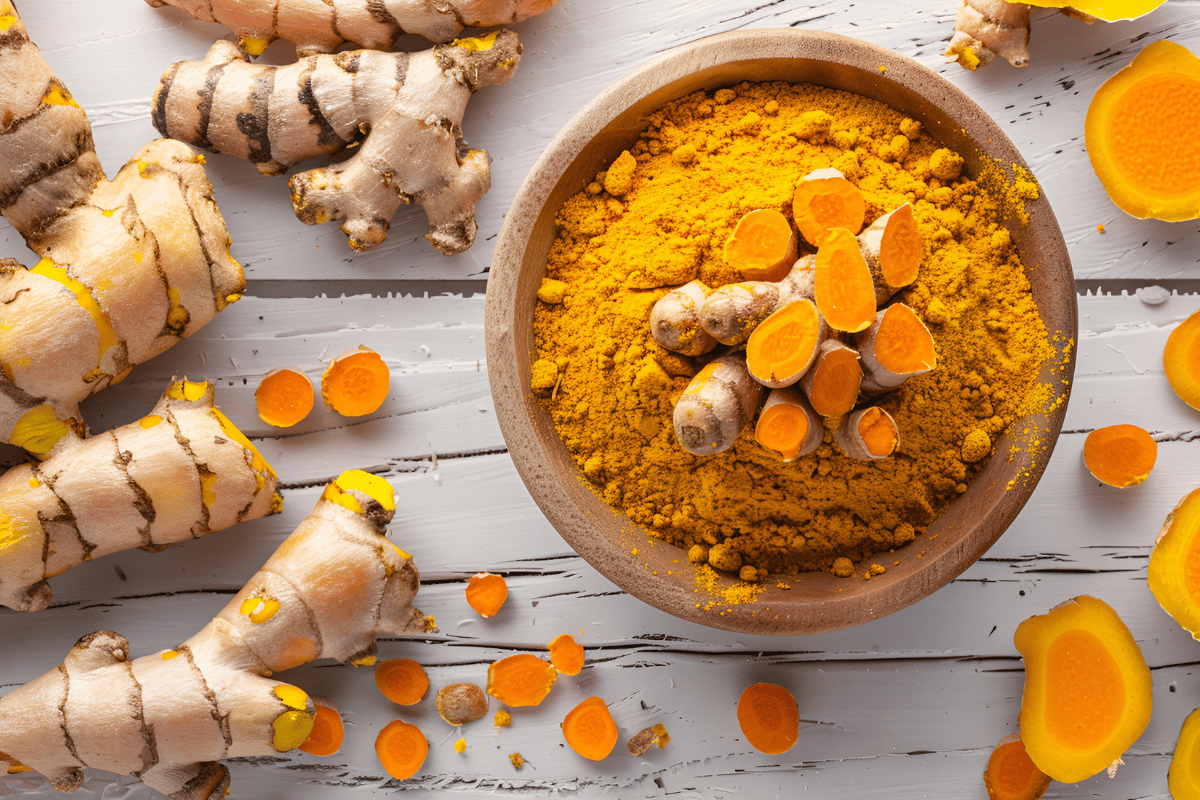
Adding some herbs and supplements to your food may do more than spice up your favorite dish, as Dr. Ramneet Kaur’s research reveals. Turmeric, garlic and lemon peel—common to many kitchens and spice racks—could help people fight, and even prevent, breast cancer.
For many battling breast cancer—especially triple-negative breast cancer, or TNBC—chemotherapy is often the go-to treatment protocol. Kaur, a cell and molecular biologist in the Department of Biology, noted however that chemotherapy is hard on many patients.
“Chemotherapy is often not the best option, particularly for TNBC patients, because it cannot distinguish between healthy fast-dividing cells and cancer cells,” she explained. “Some patients who receive chemotherapy get very sick and die of the side effects of chemotherapy rather than cancer itself.”
That’s where natural herbs and supplements might offer TNBC patients an alternative. She and her research collaborators have found that natural products like ginger, turmeric, garlic, ashwagandha, grapefruit and lemon peel can eliminate breast cancer and breast cancer stem cells in the body. These cells are chemo- and radioresistant and are highly responsible for relapse in cancer patients.
Kaur’s research cites the prevailing cultural use of these herbs and supplements in India, Pakistan and neighboring countries and their correlating lower incidences of breast cancer (compared to those in the United States). Studies also suggest that, in healthy individuals, adding these herbs and supplements to their diets can decrease cancer risk.
She explained that many of phytochemicals found in these herbs and supplements are anti-inflammatory in nature. The latest cancer studies suggest that chronic inflammation leads to cancer. These natural products are well tolerated by the human body and can serve as a possible alternative to chemotherapy, which is toxic and has many side effects in patients. Studying the efficacy of these naturally occurring chemicals is a new direction in the field of cancer biology, as natural products are not much explored to solve the problem of drug resistance and the enrichment of cancer stem cells in oncology.
As Kaur and her team from universities in Georgia and Canada continue their research on breast cancer, they are expanding their focus to include the effects of herbs and supplements on androgen-independent prostate cancer. Although treatable in its early stages, prostate cancer can become androgen-independent—an aggressive form responsible for roughly one-third of all prostate cancer deaths in the United States.
ABOUT DR. KAUR
A faculty member since 2022, Kaur teaches undergraduate- and graduate-level courses in cell and molecular biology, microbiology, anatomy, physiology, bioinformatics and general biology in the College of Letters & Sciences. She has published about her research in first-tier academic journals, including the British Journal of Cancer, Organic & Biomolecular Chemistry and the Journal of Ovarian Research.
She holds a Ph.D. in biotechnology from the Postgraduate Institute of Medical Education and Research (Chandigarh, India) and completed post-docs in cancer biology at both Harvard Medical School and Emory University.
Media contact: Michael Tullier, APR, Executive Director of Strategic Communication + Marketing, 706.507.8729, mtullier@columbusstate.edu
Related news coverage:
CSU research: Herbal treatments may kill cancer cells, local expert says (WRBL-TV, Feb. 9, 2024)
Ramneet Kaur, Columbus State University – Natural Products and Triple Negative Breast
Cancer Stem Cells (The Academic Minute, Nov. 16, 2023)