Columbus State University News
Spotlight shines on Columbus State film production studies, Columbus film industry
February 6, 2024
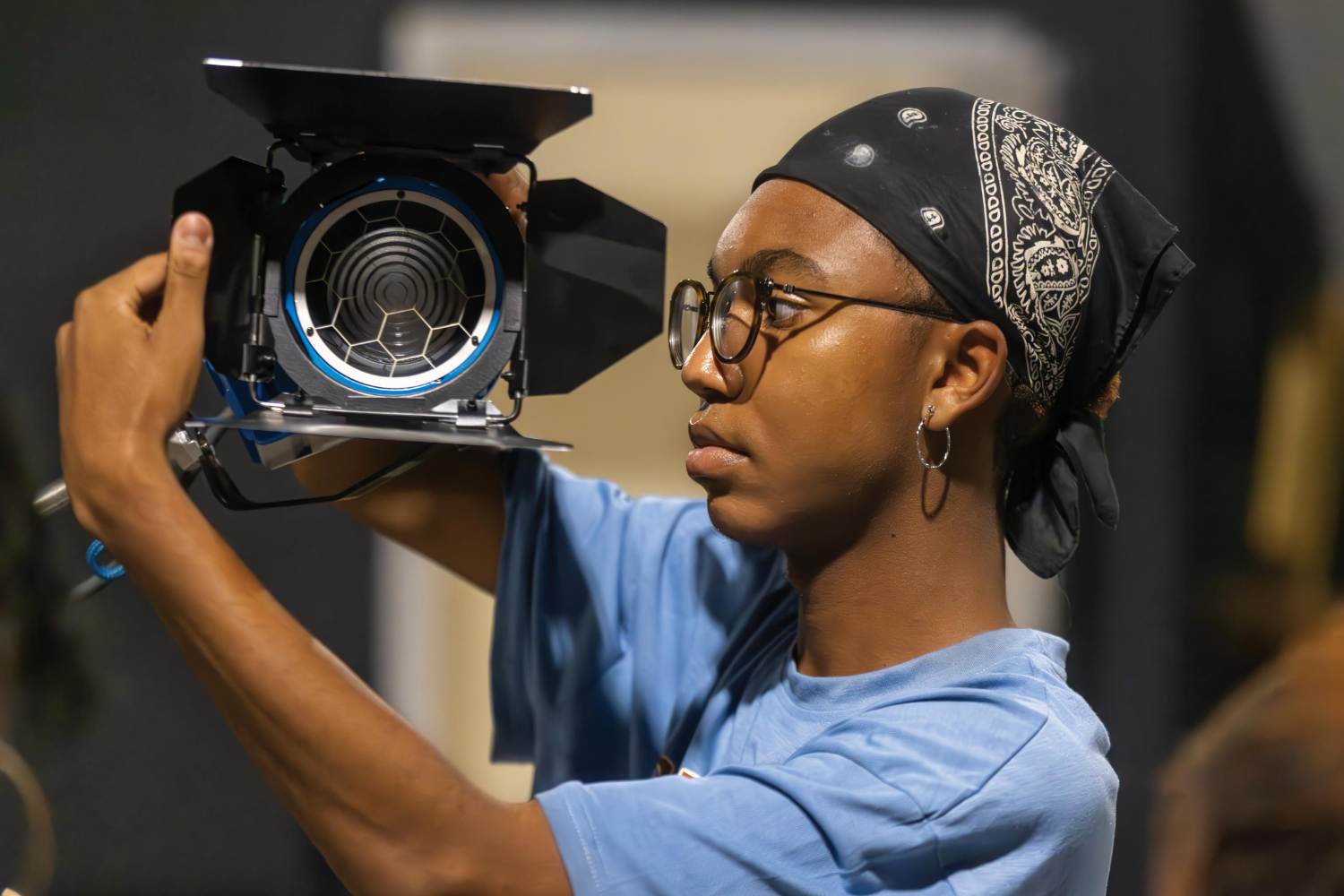
Film production in Columbus is on the rise. Recently, the city has made appearances in films including “Survive the Night” with Bruce Willis and “Still” (the first film to go through the Georgia Film Academy program at Columbus State University). With a studio providing full production services and a university program helping train a local workforce, the Columbus film industry has become a unique asset in Georgia.
Columbus was designated as one of the first “Camera Ready communities” by the Georgia Film Office. Local liaisons make it easier for film productions to scout locations and secure filming permits. In addition, the Columbus Film Commission helps bring productions to the area by providing local crew, resources and incentives.
“We have workforce, we have infrastructure, and we are very fortunate that the private sector came together and created a film fund,” said Peter Bowden, president and CEO of VisitColumbusGA, which oversees the Columbus Film Commission.
Local funds and incentives can be crucial as a production considers the best locations in which to film. In addition to an existing state tax credit, the Film Commission developed the Columbus Film Fund, which helps productions save money by compensating travel costs associated with relocating the production to Columbus.
Choosing a “Camera Ready community” like Columbus is not just beneficial for the production but for the entire community. Hotels, catering services, shops and rental companies are all crucial to sustaining the needs of a film during monthslong periods of filming.
“Film production has a huge wave of economic impact across the city,” Bowden said.
While Atlanta and Savannah still lead the state in film production, there can be disadvantages in trying to film in oversaturated areas. Productions may encounter obstacles to securing permits for popular locations or finding enough crew. The Columbus film industry provides an ideal alternative.
“We would really like Columbus to establish itself as Georgia’s third film hub,” Bowden said.
CREWING UP
Columbus State University’s partnership with the Georgia Film Academy (GFA) and the
Columbus Film Commission hold a starring role in the growth and development of the
city’s film industry. At Columbus State, the GFA program is preparing future film
professionals for success through traditional degree programs, certificates and its
nexus program.
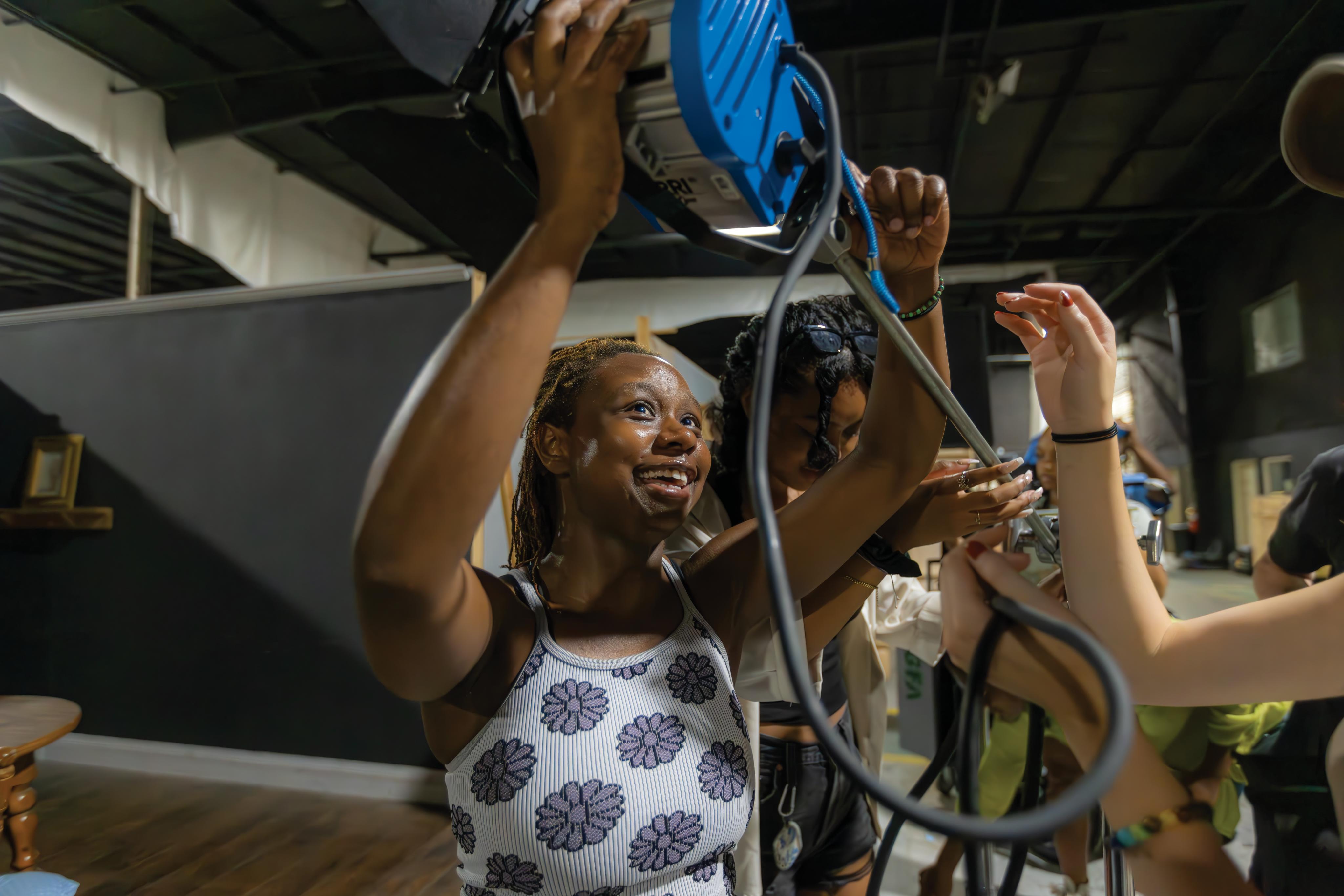
Columbus State's film production students learn how to use lighting equipment during a Columbus State University's GFA film class at Flatrock Studios in Colulmbus, Georgia. ©Journal Communications/Jeff Adkins
For film productions, bringing qualified crew members from as far away as Los Angeles
is a costly expense that can be avoided by hiring locals.
“Georgians can train Georgians to take these jobs,” says Dr. Danna Gibson, a professor and chair of the Department of Communication. “That was the impetus for starting the Georgia Film Academy.”
The program includes a paid internship on a film set under the supervision of a qualified professional. This hands-on experience is vital for those interested in a career in film since much industry-specific protocol cannot be easily taught in a classroom.
Ginger Steele, a 2017 alumna of Columbus State’s GFA program, used the skills she learned to open her own business. Steele’s ties to Columbus film run deep; her mother was an extra in “The Green Berets,” which was filmed at Fort Moore, and her father taught her how to operate an 8-millimeter film camera at a young age.
“It’s a full circle for me,” said Steele, who co-founded J.G. Arthaus LLC, Columbus’s first prop house, located at Flat Rock Studio. “There’s so much talent here. “There are so many stories that Columbus has to offer.”
Since the nearest prop houses were previously in Atlanta, J.G. Arthaus is poised to become yet another asset for Columbus’ thriving film sector.
BRINGING IT HOME
Columbus continues to build out the necessary infrastructure to sustain a thriving film industry. Flat Rock Studio is Columbus’ own movie studio, consisting of production offices, sound stages and backlots for filming. It is managed by Story Mill Entertainment, a full-service production company co-founded by John Mock, its current CEO.
“We think Columbus is poised to see a big expansion in film and TV production,” Mock said. “Producers want to see the ability to film in Georgia, but without a lot of the headaches that come with filming in Atlanta.”
For Mock, an appealing work environment is important for crew who could be working away from home for months at a time. The local nightlife, entertainment and arts community can help people feel at home in Columbus.
“The community is so supportive of film and TV,” he said. “Columbus is a great place to film.”
STUDYING FILM PRODUCTION
Columbus State University’s Film Production program studies include a traditional bachelor’s degree in addition to a 15-hour minor for currently enrolled students and standalone 18-hour certificate and 60-hour nexus degree options. Any of them are ideal for budding filmmakers, broadcasters and multimedia storytellers.
Students benefit from the university’s prime access to hands-on opportunities locally and statewide that comprise Georgia’s $6 billion film industry. Its partnerships with the Georgia Film Academy and Columbus-based Flat Rock Studio place its film production students in the heart of film studios, production companies, casting agencies and related businesses.
The original version of this article appeared in the print version of Livability Greater Columbus, Georgia, and in the online article entitled “Spotlight Shines on Columbus Film Industry,” both written by Wesley Broom; photos and content © Journal Communications/Jeff Adkins
Media contact:
Michael Tullier, APR, Executive Director of Strategic Communication + Marketing, 706.507.8729,
mtullier@columbusstate.edu