Columbus State University News
New institute honors Moores; strengthens Columbus State’s commitment to military history education, preservation
October 7, 2026
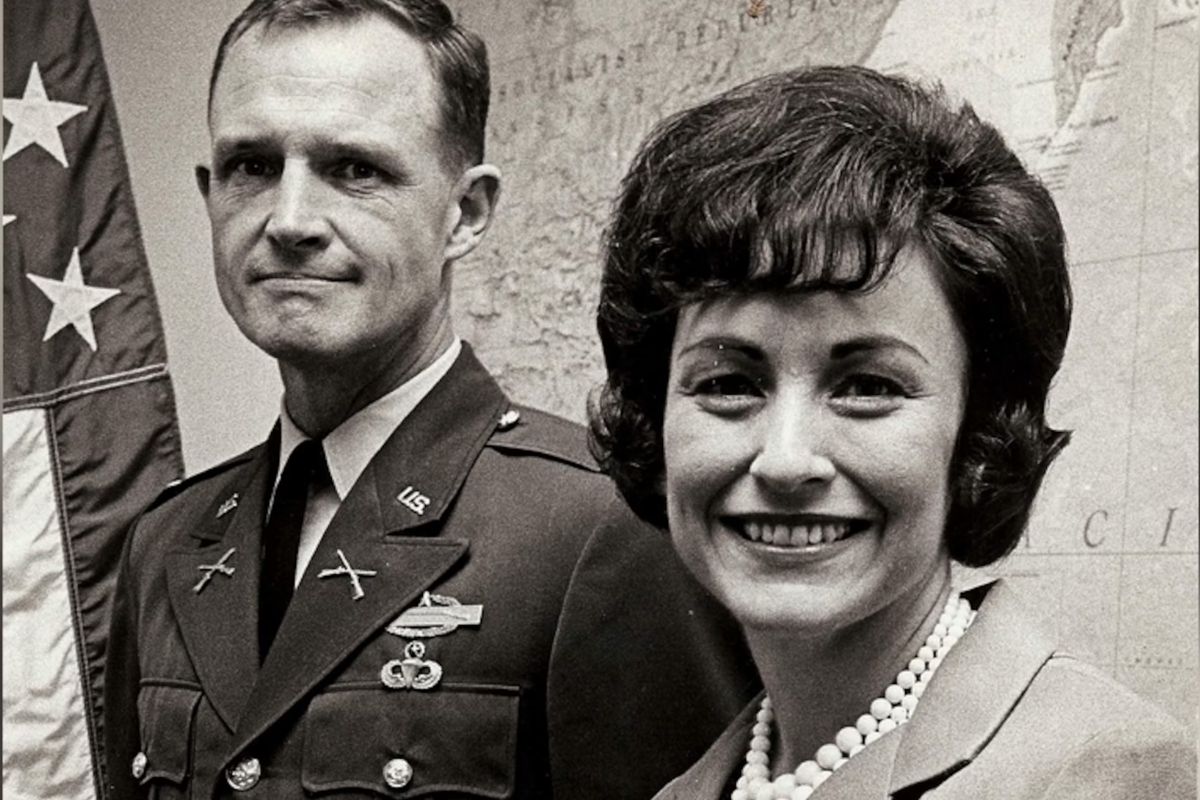
Columbus State University has created the Lt. Gen. Harold & Julia Moore Institute for the Study of the American Military Experience, a new multidisciplinary center dedicated to advancing teaching, research and public engagement focused on the United States military’s role in society. The University System of Georgia Board of Regents approved the naming at its Oct. 7 meeting, following the university’s request.
Through the Moore Institute, Columbus State aims to grow its existing military history programs that foster informed public discourse, preserve critical historical records and offer valuable educational opportunities. Situated in Columbus, Georgia—near vital military installations like the U.S. Army’s Maneuver Center of Excellence and Fort Benning and locations like the National Infantry Museum and National Civil War Museum—the university also seeks to strengthen its longstanding ties to one of the nation’s most significant military and veteran communities.
Combined, these have established Columbus State as a destination where students, academicians, military professionals and historians can examine the experiences of those who serve and the broader impact of the military on American society.
“Columbus State University is uniquely positioned to lead the national conversation about the American military experience,” said Dr. Dustin Anderson, provost and chief academic officer. “Establishing the Lt. Gen. Hal & Julia Moore Institute of the Study of the American Military Experience reflects both our opportunity and our responsibility to deepen the understanding of the military’s role in our democracy, to preserve the stories of those who have served, and to equip the next generation of leaders and informed citizens.”
According to Anderson, Dr. David Kieran will serve as the institute’s inaugural director. Kieran, a Columbus State faculty member since 2022, is the university’s Col. Richard R. Hallock Distinguished University Chair of Military History.
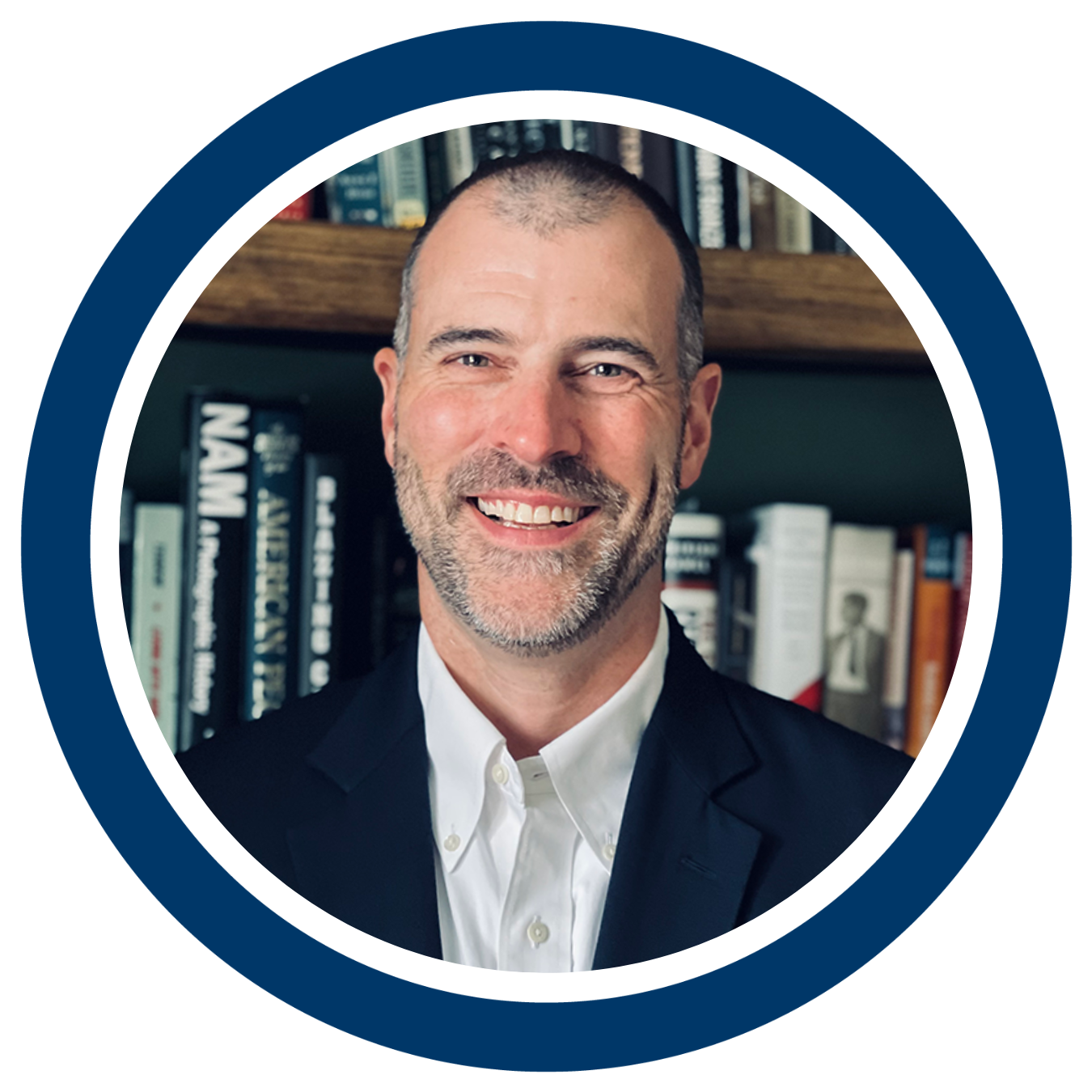 “For those of us who have not served in the military, it’s incumbent on us as a matter
of citizenship to thoughtfully analyze and appreciate the military’s role in society
and the work that we ask our servicemen and servicewomen to do, as well as the experiences
of military families and the communities in which they live,” Kieran (pictured) noted.
“Through our new Moore Institute for the Study of the American Military Experience,
Columbus State will more fully establish itself as the Southeast’s premier military
history institute as we further engage with our fellow citizens in and out of uniform
about what that commitment to serve our country really means.”
“For those of us who have not served in the military, it’s incumbent on us as a matter
of citizenship to thoughtfully analyze and appreciate the military’s role in society
and the work that we ask our servicemen and servicewomen to do, as well as the experiences
of military families and the communities in which they live,” Kieran (pictured) noted.
“Through our new Moore Institute for the Study of the American Military Experience,
Columbus State will more fully establish itself as the Southeast’s premier military
history institute as we further engage with our fellow citizens in and out of uniform
about what that commitment to serve our country really means.”
Uniting military history education, preservation
Kieran described the Moore Institute as a central hub for collaboration within the university and beyond. As it broadens classroom engagement, promotes innovative research, expands archival collections and spurs new opportunities for student internships, public programs and global study, it will also connect and enhance existing military-related university initiatives such as:
- The Col. Richard R. Hallock Endowment for Military History, established in 2010 to honor the distinguished World War II parachutist, has further broadened its scholarly and public initiatives under Kieran’s leadership.
- The Myriam & Richard Hallock Distinguished Lecture in Foreign Policy & National Security Endowment, created in early 2026 by Mrs. Hallock, a career foreign service officer, and the Richard R. Hallock Foundation, complements programs funded by her husband’s initial endowment.
- Within the university’s Archives & Special Collections, the newly established 1st Lt. William A. Donahoe Jr. and Corporal Charles Foster Vault for American Military History Preservation highlights several nationally significant collections documenting military history spanning the American Revolution to today. Notable additions include papers and artifacts from former Secretary of the Army John O. Marsh, trailblazing Army social worker James Martin, and Robert McNamara “whiz kid” Pierre Sprey.
- The ROTC Cougar Battalion, which over the last 50 years, has commissioned more than 720 U.S. Army officers while remaining one of the top units in the U.S. Army Cadet Command.
- Graduate degree partnerships nationwide with the U.S. Army’s Captains Career Courses and Sergeant Major Academy, whereby graduates of these programs receive pre-approved academic transfer credit toward several Columbus State master’s degrees.
- Academic, research and operational partnerships with Fort Benning, along with military organizations and nearby historic sites and landmarks like the National Infantry Museum & Soldier Center and the National Civil War Museum.
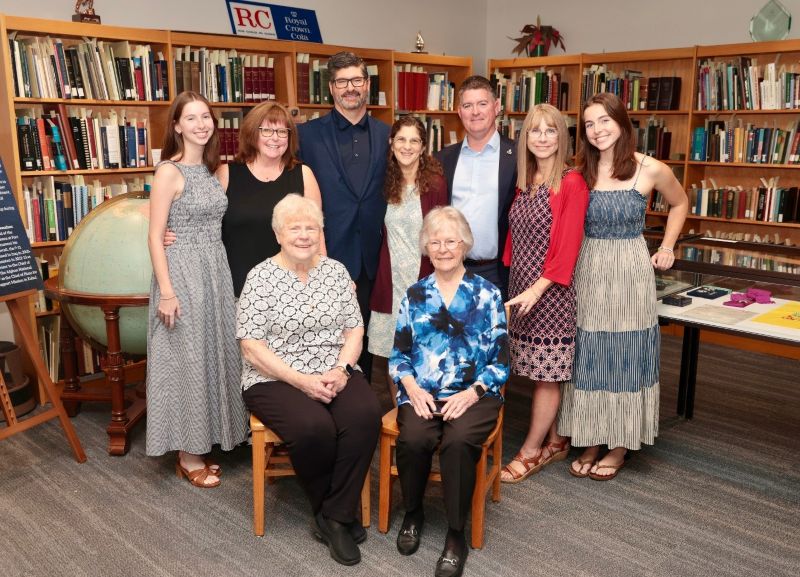
The Donahoe and Foster families at the celebration honoring the creation of endowments supporting the Moore Institute: the 1st Lt. William A. Donahoe Jr. & Cpl. Charles Foster Endowment for the Support of American Military History Preservation, and the 1st Lt. William A. Donahoe Jr., U.S. Army, Military Oral History Endowment. Pictured: (seated, left to right) JoAnn Foster and Alice Donahoe; (standing, left to right) Delaney Donahoe, Maureen Donahoe, Keith Donahoe, Diana Donahoe, Maj. Gen. (ret.) Patrick Donahoe, Theresa Donahoe and Brenna Donahoe.
Initial funding for the Moore Institute includes personal philanthropic gifts from
the Donahoe and Foster families, which includes Maj. Gen. (ret.) Patrick Donahoe,
a former Fort Benning commanding general and his two siblings, Maureen and Keith.
Their combined support will protect and preserve irreplaceable military history artifacts,
as well as the oral history collection of generations of service members and military
families.
Additional support includes $175,000 in bipartisan federal funding legislation for military history preservation, obtained in early 2026 with help from U.S. Senators Jon Ossoff and Rev. Raphael Warnock—both of whom represent Georgia.
Honoring the Moores
Columbus State President Stuart Rayfield called the Moores’ 30 years of dedicated service “an enduring blueprint” for both students and the community.
“Naming our Institute for the Study of the American Military Experience in honor of
the Moores reflects Columbus State University’s deepest commitment to our core value
of servant leadership,” Rayfield explained. “Gen. Moore’s courage on the battlefield
and Mrs. Moore’s compassionate advocacy for military families embody what it means
to put others first—a legacy forever rooted right here in Columbus.”
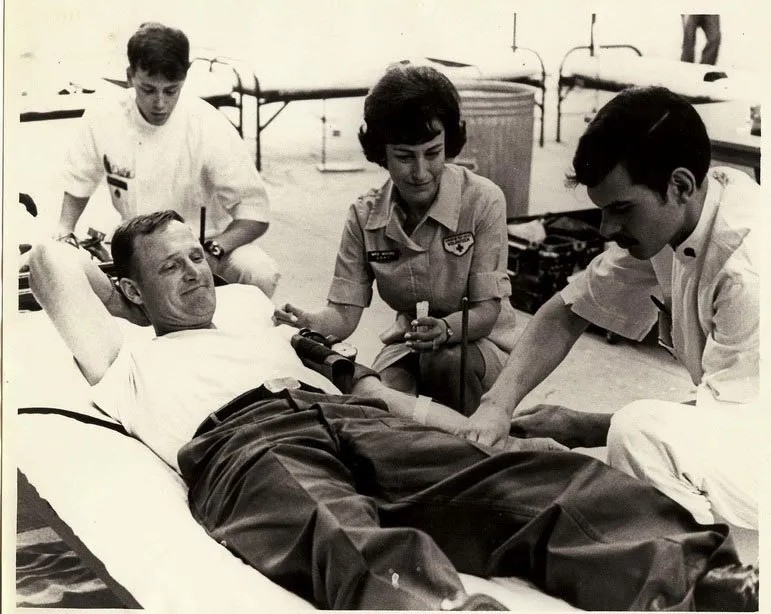 Even as a general’s wife, Julie Moore volunteered with the Red Cross. Here, she is
seen drawing blood from Maj. Gen. Hal Moore while they were stationed in Korea from
1969 to 1971. (Photo courtesy of the Moore family.)
Even as a general’s wife, Julie Moore volunteered with the Red Cross. Here, she is
seen drawing blood from Maj. Gen. Hal Moore while they were stationed in Korea from
1969 to 1971. (Photo courtesy of the Moore family.)
The Moores’ lives were deeply connected to Columbus, which acted as a key home base
during important phases of their military journey. Immediately after graduating from
West Point, the then-second lieutenant completed the Infantry Officer Basic Course
at Fort Benning and returned in 1951 for the Infantry Officer Advanced Course.
In 1964, he assumed command of a battalion in the 11th Air Assault (Test) Division.
He played a key role in pioneering the revolutionary airmobile tactical doctrine that
would shape combat in Vietnam. He is best known for leading the 1st Battalion, 7th
Cavalry Regiment at the 1965 Battle of Ia Drang Valley, the first significant engagement
between U.S. and North Vietnamese forces. The battle was the primary focus of the
2002 movie, We Were Soldiers, which featured Mel Gibson as Moore and was based on
Moore’s 1992 biographical book, We Were Soldiers Once ... and Young that he co-authored.
Moore’s tactical skill and first-on, last-off-the-field leadership style earned him
the Distinguished Service Cross.
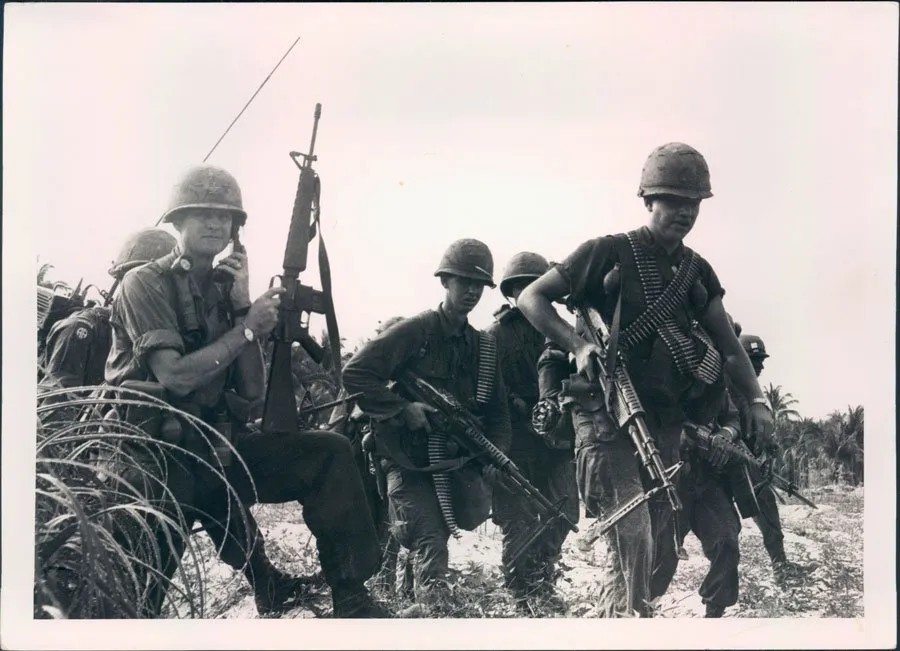 Then-Brigade Commander Hal Moore, far left, leads his troops in Vietnam in early 1966.
(Photo by Art Zich and courtesy of the Moore family)
Then-Brigade Commander Hal Moore, far left, leads his troops in Vietnam in early 1966.
(Photo by Art Zich and courtesy of the Moore family)
While Hal served in the field, Julie and their children resided in Columbus. From
here, she helped launch a campaign to improve casualty notification procedures as
war losses increased. Shocked by the wartime method of sending telegrams through taxi
drivers, she took it upon herself to attend funerals and visit grieving families.
Her efforts, along with other military spouses, led the U.S. Army to create official,
in-person notification teams led by uniformed officers.
Their lifelong connection and contributions to Columbus’s military community are still remembered today, with both Hal and Julie buried together in the Fort Benning Main Post Cemetery.
“The study of the professional military and the influence of military culture within the United States is unique to Columbus State,” noted Greg Moore, one of the Moores’ five children. “It is significant because the lives of soldiers and their families carve out a unique ethos within the American experience. Understanding this ethos—how soldiers are made from citizens dedicated to give their lives in service, and how communities and families are built around them—will ensure that Americans know better those who stand at risk for them, every day.”
“It is this connection between the American military and Americans that my parents truly loved and honored in their lives and infused into their community,” Moore continued. “Our family is equally honored that Columbus State shares this conviction and purpose.”
The university will celebrate the Moore Institute’s founding and honorary naming as part of a Veterans Day program on Wednesday, Nov. 11. The event at Columbus’ PowerHouse will feature Patrick Murphy, the first Iraq War veteran to be elected to the U.S. House of Representatives, who later served as the 32nd U.S. under secretary of the Army and briefly as acting secretary of the Army. The program begins at 7 p.m.
To receive information about the Nov. 11 event and other Moore Institute endeavors, subscribe to Hallock Endowment email updates.
Media contact: Michael Tullier, APR