Columbus State University News
Upcoming Columbus State-Library of Congress partnership to further collect, preserve oral military histories
October 8, 2026
On Oct. 20-21, Columbus State University is partnering with the Library of Congress’ Veterans History Project to train and guide volunteers in interviewing veterans and helping to preserve their precious military artifacts. The initiative reaffirms the university’s commitment to preserving, teaching and commemorating the rich military heritage for which the Chattahoochee Valley is known.
The Veterans History Project’s visit to Columbus State supports the Library of Congress’ effort to collect, preserve and make accessible American war veterans’ personal accounts, helping future generations better understand the realities of military service. VHP representatives will train volunteers to conduct oral history interviews and gather donated documents, such as letters and photographs. They will then guide volunteers through their first interviews with local veterans, continuing to build a permanent, firsthand archive of U.S. military history.
On Tuesday, Oct. 20, Library of Congress representatives will lead two public workshops on the Veterans History Project initiative, training students and community members to conduct and donate oral histories to the project as volunteer interviewers and notetakers:
- 12:00 p.m. to 1:30 p.m.: Simon Schwob Memorial Library [map], The Forum (1st Floor, Room 132), Main Campus. Lunch will be provided, and off-campus visitors should secure a visitor’s pass online. This session is scheduled to best accommodate students, faculty and staff, but the community is invited.
- 6:00 p.m. to 7:30 p.m.: Frank Brown Hall [map], Room 1304, RiverPark Campus. Refreshments will be provided. This session is scheduled to best accommodate community members, but students are invited.
Capacity at each workshop is limited, and those interested in attending should register online in advance.
On Wednesday, Oct. 21, the university will conduct oral military history interviews, with help from those who complete Tuesday’s training sessions. Veteran storytellers, notetakers and interviewers can sign up for 90-minute sessions, held from 9 a.m. to 5:30 p.m. in the library.
Even if all 24 interview slots for Oct. 21 fill up, Archives & Special Collections staff and locally trained interviewers will keep scheduling sessions beyond that date to meet demand.
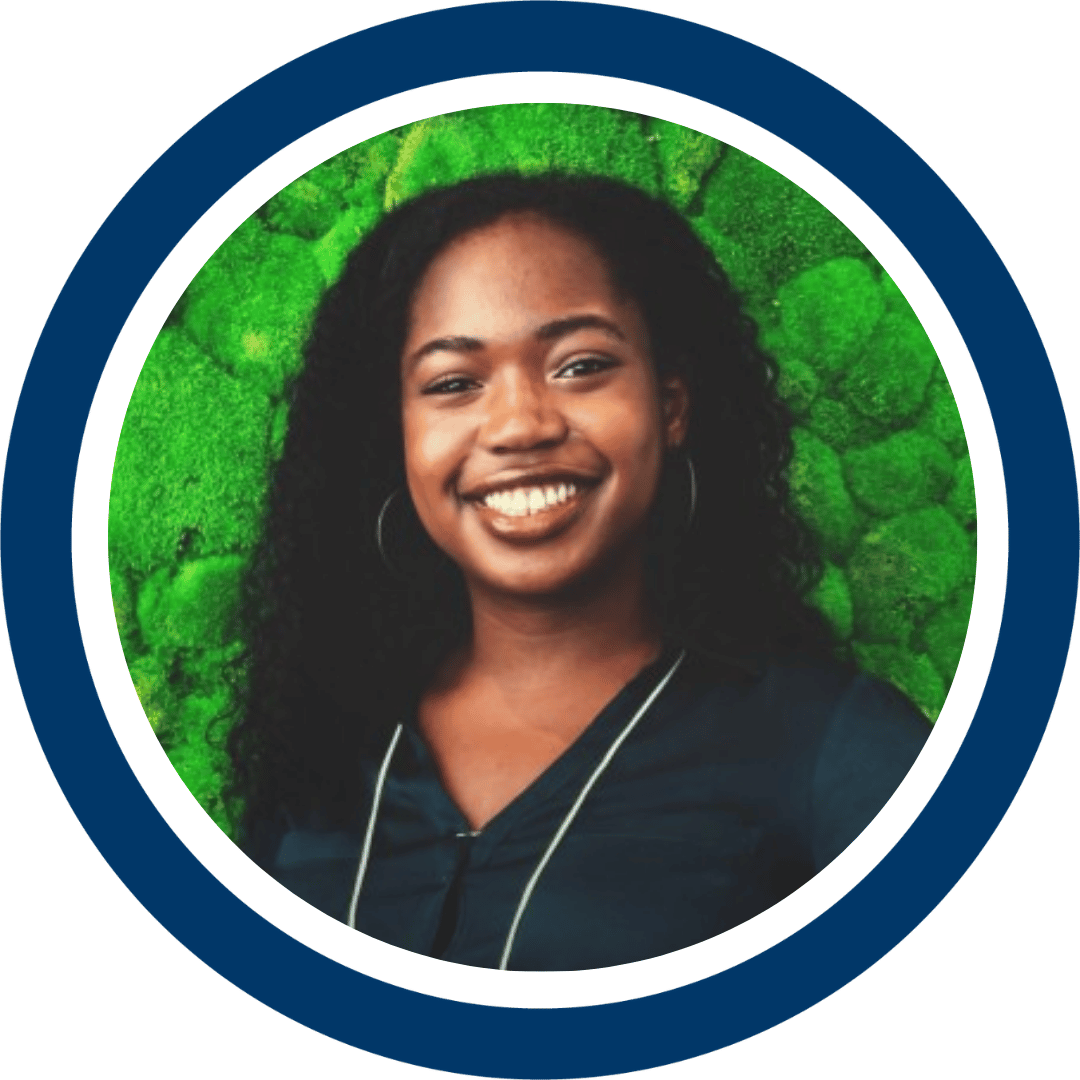 “Our number one priority with this partnership is to ensure these stories aren’t forgotten,”
said Adaeze Nwigwe (pictured), visiting archivist for military history in Columbus
State’s Archives & Special Collections. “We want to provide our servicepeople with a place to share their stories in a professional
and dignified way, and to give them a platform where their stories can be preserved
and made available for generations to come.”
“Our number one priority with this partnership is to ensure these stories aren’t forgotten,”
said Adaeze Nwigwe (pictured), visiting archivist for military history in Columbus
State’s Archives & Special Collections. “We want to provide our servicepeople with a place to share their stories in a professional
and dignified way, and to give them a platform where their stories can be preserved
and made available for generations to come.”
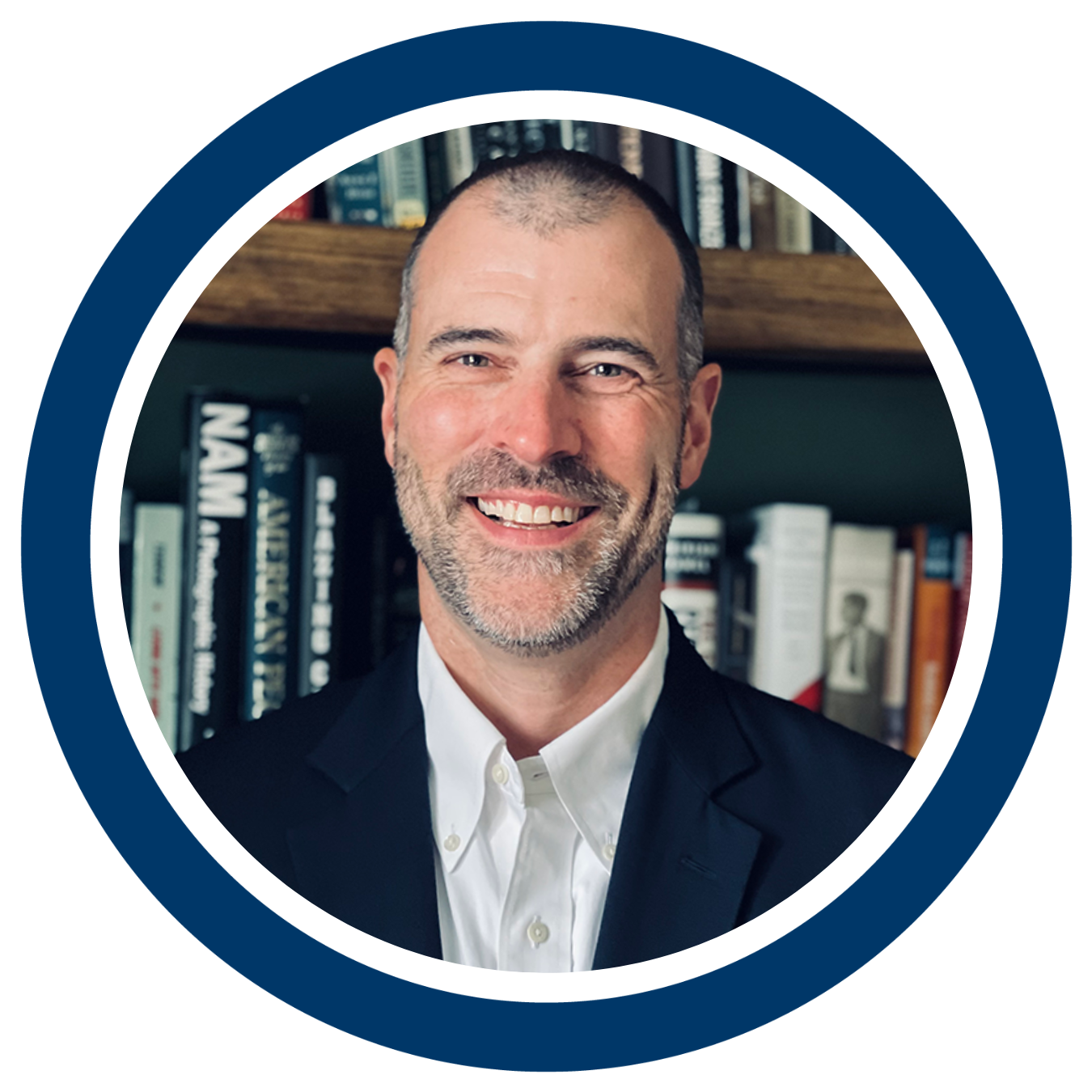 Along with fostering students’ appreciation of military history and its relevance
to today’s society, Dr. David Kieran (pictured), director of the newly established Lt. Gen. Harold & Julia Moore Institute for the Study of the American Military Experience and the university’s Col. Richard R. Hallock Distinguished University Chair of Military
History, noted that participating will help them develop tangible, career-ready skills.
Along with fostering students’ appreciation of military history and its relevance
to today’s society, Dr. David Kieran (pictured), director of the newly established Lt. Gen. Harold & Julia Moore Institute for the Study of the American Military Experience and the university’s Col. Richard R. Hallock Distinguished University Chair of Military
History, noted that participating will help them develop tangible, career-ready skills.
“For students interested in careers in public history, this is an opportunity to receive training and create content for one of the nation’s most prominent and respected authorities: the Library of Congress,” he said. “For students pursuing any degree or career path, it’s a chance to develop listening, interviewing, writing and editing skills that will serve them in any profession.”
Trained notetakers and interviewers can keep collecting oral histories after Oct. 21 and submit them to the Library of Congress for archiving.
What makes a ‘good’ oral history story?
Kieran stressed that capturing these stories is essential to fully understanding the nation’s past. He explained that military history often centers on general officers and high-level strategy, while this project focuses equally on the everyday citizens and neighbors who served.
“The citizen soldier is fundamental to the nation. You can’t tell the story of American military history by talking only about generals,” Kieran said. “Every story helps us understand the military more completely and more fully, and that’s what we’re trying to do at Columbus State. This project is our way of saying, ‘your story matters.’”
Established by Congress in 2000, the Veterans History Project collects, preserves and shares firsthand accounts from U.S. military veterans. Through this collaboration, Columbus State’s newly established Moore Institute and its Archives & Special Collections bring this national mission to the local community.
“These oral history interviews aren’t limited to career active-duty soldiers,” Nwigwe explained. “Every story matters—from forward operating bases to the Pentagon, and every deployment and duty station in between. We want to document military service from every perspective: wartime and peacetime, stateside and overseas, and officer and NCO. Every soldier’s contribution is woven into the fabric of our nation’s military history and experience.”
Kieran added: “We should never underestimate the contributions or the experience or the value of the stories of the everyday people who were serving—whether they served in war or served in peace, whether they served for a career, whether they served for a year. Because that’s all part of the story.”
While the Library of Congress has defined standards—a specific focus on veterans and Gold Star families—for what oral histories qualify for its collection, Columbus State has more flexible guidelines. The university also welcomes the stories of civilian support personnel who worked for the military and others who have military-connected stories to share. The Archives & Special Collections will retain the oral histories it receives in perpetuity and also make them available to students and historians. The interviewer and the subject of that interview will receive archival versions of those interviews.
Advancing military history at Columbus State
The partnership began with Nwigwe. Before joining the Columbus State faculty in Spring 2026, she conducted oral histories for the Veterans History Project while pursuing her master’s in history at the University of Central Florida. That experience inspired her to reconnect with the Library of Congress and bring its team to CSU.
“From there, we thought an in-person training session would be a great way for students and the community to come together,” she recalled. “A student might interview their grandfather about a deployment, or a local might have a friend who hasn’t really talked about their time in the service but would like them to record their story so it isn’t lost.”
That philosophy aligns with the combined efforts of the Hallock Endowment and the Archives & Special Collections—particularly the latter, which is now home to the 1st Lt. William A. Donahoe Jr. & Cpl. Charles Foster Endowment for the Support of American Military History Preservation and the 1st Lt. William A. Donahoe Jr., U.S. Army, Military Oral History Endowment. Together, these recently established endowments enable Columbus State to further protect and preserve irreplaceable military history artifacts and the oral histories of generations of service members and military families.
“Much of the American military experience isn’t documented in papers, and what is on paper isn’t always immediately available to researchers,” Kieran said. “Oral history—and involving students in it—is one of the pillars of what we do here at Columbus State.”
Kieran said he hopes to broaden his students’ perspectives on military history, both those who participate as interviewers and those who will use these oral histories in their studies and research.
“The American military experience is broad and far-reaching, touching many aspects of American life. Students may already know that their teacher or neighbor—especially in Columbus—or their Little League coach served, but often they don't know much beyond that. Hearing that person’s story firsthand offers a different, deeply personal perspective,” he said.
Kieran said he hopes telling these stories aloud will encourage further efforts to preserve military history as veterans, retirees and their families share the diaries, correspondence, letters, photographs and artifacts behind them. Far too often, he said, historical military items are lost, destroyed or thrown away, and it’s only later that their true value to both families and historians is realized.
For example, the letters that a soldier wrote home from Vietnam are precious to the family, but they also offer historians insights into the experiences of those who served that are otherwise unavailable. For those reasons, Kieran said, those materials could be archived at Columbus State, or archives staff could advise families on how to restore and store them so they can be passed down to future generations.
He also noted that Columbus State’s location and its many other military-affiliated programs reinforce the university’s focus on studying the American military experience. The university has long earned Gold status on MilitaryFriendly.com’s list of the country’s small public military-friendly schools. More than 20% of its students have a military connection, and more than 6% of its employees have served in the military.
In addition to this month’s oral history activities, Nwigwe and Kieran hope to work with local chapters of the Veterans of Foreign Wars, the American Legion, Disabled American Veterans and similar military-affiliated organizations to schedule oral history interview days. To discuss those events, individual interviews, or upcoming Library of Congress-related events, contact Nwigwe.
Additional information about the Veterans History Project is available on the Library of Congress website.
Media contact: Michael Tullier, APR