Columbus State University News
Year-long Hallock military history lecture series focuses on 25th anniversary of U.S. war in Afghanistan
September 1, 2026
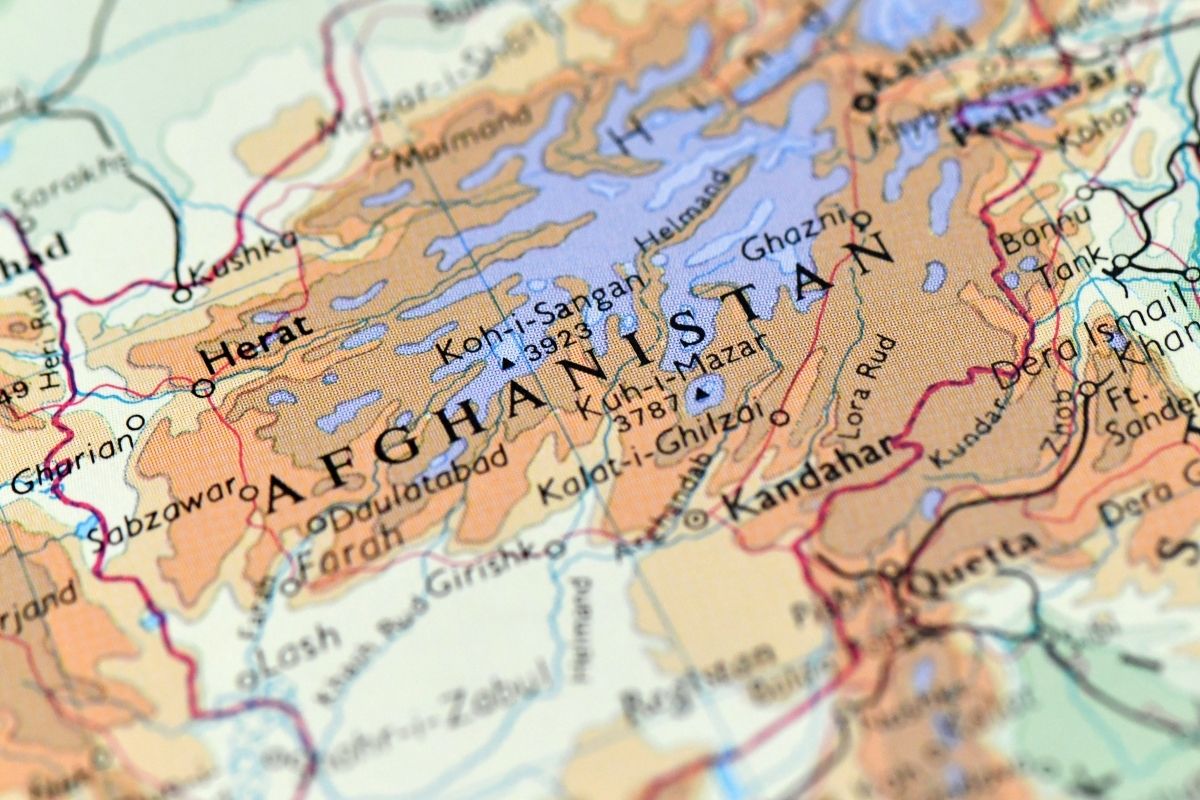
A series of lectures and public presentations throughout the 2026-27 academic year will explore the origins and consequences of the United States’ involvement in Afghanistan. This series is part of Columbus State University’s annual programming funded by the Hallock Endowment for Military History.
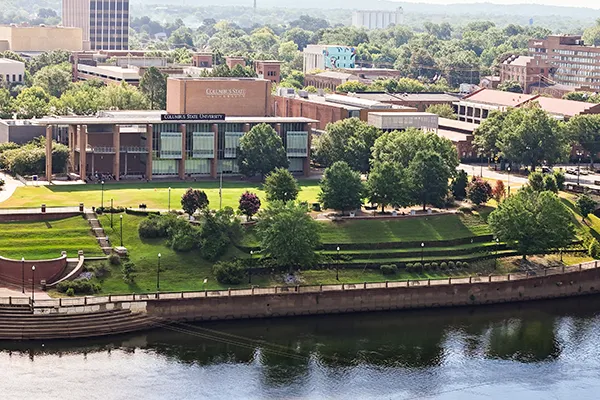
The series kicks off on Thursday, Sept. 17, with Shamila N. Chaudhary, co-chair of the Afghanistan War Commission. As a leader of the bipartisan legislative commission established by the U.S. Congress, she will explore the war’s origins, impacts, and legacy. The free public lecture starts at 7 p.m. in Rankin Livery on the RiverPark Campus [map].
“Throughout the year, we will examine the decisions that influenced the conflict in Afghanistan, its effects on the greater Middle East and the lessons it provides for U.S. foreign policy, national security and public accountability,” explained Dr. David Kieran, the Col. Richard R. Hallock Distinguished Chair in Military History and professor in the Department of History, Geography & Philosophy. “Understanding the history of that war, the experiences of those who served and its lessons and legacies is crucial as the nation faces new challenges in the 21st century.”
The U.S. launched the war in Afghanistan in October 2001 following the Sept. 11 terrorist attacks. American and allied forces intervened to dismantle al-Qaeda and remove the Taliban regime that harbored it. Over more than 20 years, this operation grew from a straightforward counterterrorism effort into a multifaceted campaign involving state-building and counterinsurgency—with military strategies changing across four presidential administrations. The conflict resulted in the loss of nearly 2,500 American service members and tens of thousands of Afghan military and civilian casualties, and cost trillions of dollars.
The war officially ended in August 2021 with the complete withdrawal of U.S. forces. This was followed by the swift fall of the U.S.-backed Afghan government and the Taliban’s return to power. Debates over the conflict’s legacy are characterized by ongoing discussions about military goals, national security, human rights, and the lasting effects on veterans and Afghanistan as a whole.
The Hallock Endowment for Military History’s annual lecture series and related events aim to deepen students’, historians’ and the public’s understanding of the military, those who serve in it, its role in the world, and its place in U.S. culture. Recent lecture series have covered topics such as World War II and the wars in Korea, Vietnam, and Iraq.
 “By thoroughly exploring the country’s military history, we can sincerely honor the
dedication and complex experiences of our service members. It also encourages us to
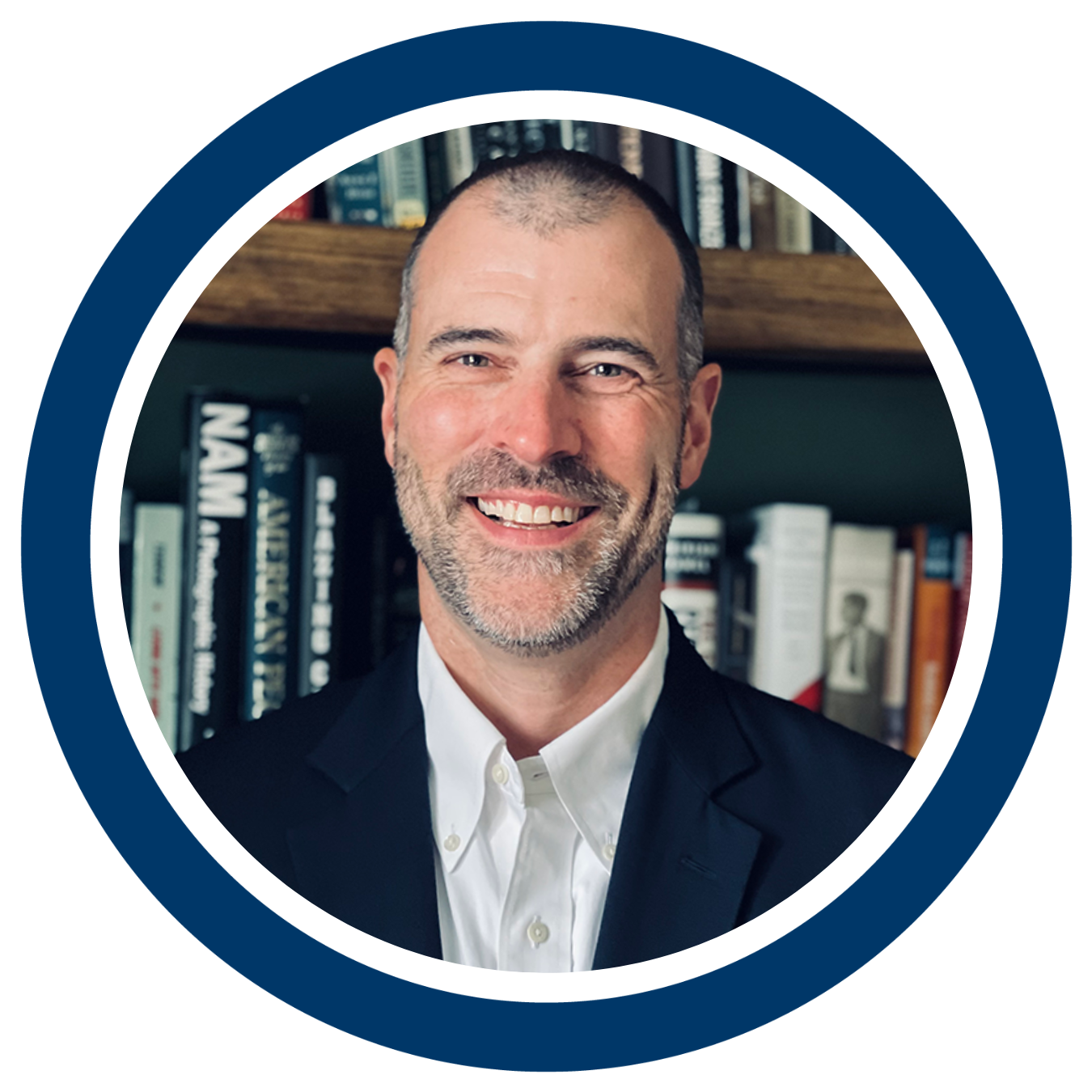
have rigorous and respectful conversations about these important topics,” Kieran (pictured)
said. “By thoughtfully examining past conflicts—from World War II to recent wars in
Iraq and Afghanistan—we provide our students, scholars and the wider community with
important historical context. This helps everyone better understand the military’s
role in our world today and prepares us to make informed decisions about national
security in the future.”
“By thoroughly exploring the country’s military history, we can sincerely honor the
dedication and complex experiences of our service members. It also encourages us to
have rigorous and respectful conversations about these important topics,” Kieran (pictured)
said. “By thoughtfully examining past conflicts—from World War II to recent wars in
Iraq and Afghanistan—we provide our students, scholars and the wider community with
important historical context. This helps everyone better understand the military’s
role in our world today and prepares us to make informed decisions about national
security in the future.”
The lecture series continues throughout the 2026-27 academic year, with events on a near-monthly schedule and with topics examining multiple facets of the war in Afghanistan.
Visit the Hallock Endowment for Military History’s website for more information, a schedule of upcoming events, and to subscribe to future news updates.
Media contact: Michael Tullier, APR